

What Happens Inside the Body When the Liver Is Diseased?
The liver performs over 500 vital functions. When it becomes inflamed, congested, or damaged, several internal changes occur:
If you or your loved ones are struggling with liver problems, naturopathy offers a powerful, safe, and scientifically aligned natural pathway to restore liver function and regenerate health from within.
Let us understand what truly happens inside the body — and how natural healing can restore harmony.
Chronic Liver Disease (CLD) – Progressive Structural Damage
Chronic Liver Disease (CLD) is long-standing liver damage (more than 6 months) caused by conditions like fatty liver, viral hepatitis, alcohol injury, autoimmune disorders, or metabolic disease.Progression Flow of CLD
Healthy Liver
      ↓
Fat Accumulation (Steatosis)
      ↓
Inflammation (Steatohepatitis / Hepatitis)
      ↓
Fibrosis (Scar Formation)
      ↓
Cirrhosis (Advanced Scarring)
      ↓
Liver Failure / Complications
Healthy Liver Structure
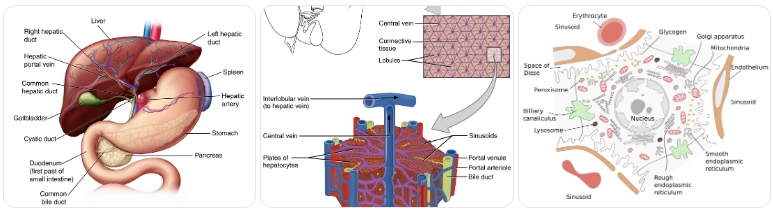
👉 Soft, smooth tissue
👉 Normal blood flow through portal vein
👉 Active detox & bile production
👉 Efficient protein and glucose metabolism
Stage 1: Fatty Liver (Steatosis)
What Happens Inside?
👉 Excess glucose converts into triglycerides.👉 Fat droplets accumulate in hepatocytes.
👉 Liver becomes enlarged and heavier.
👉 Usually reversible.
Causes:
👉 Obesity👉 Insulin resistance
👉 High carbohydrate intake
👉 Alcohol
Fatty Liver – Levels (Grades)
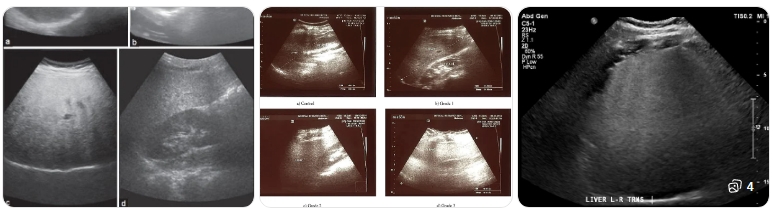
Grade 1 (Mild)
👉 Slight increase in liver brightness (ultrasound)👉 < 33% hepatocytes affected
👉 No significant structural damage
👉 Often asymptomatic
Grade 2 (Moderate)
👉 33–66% fat infiltration👉 Mild inflammation may begin
👉 Fatigue, heaviness in right abdomen
👉 Liver enzymes may rise
Grade 3 (Severe)
👉 66% fat infiltration👉 Marked enlargement
👉 High risk of progression to fibrosis
👉 Metabolic syndrome usually present
Hepatitis – Inflammatory Damage
Hepatitis means inflammation of liver cells. It may be caused by:👉 Viral infection
👉 Alcohol
👉 Autoimmune reaction
👉 Toxins
What Happens in Hepatitis?
Trigger (Virus / Toxin / Autoimmune)
          ↓
Immune activation
          ↓
Hepatocyte swelling & necrosis
          ↓
Elevated ALT / AST
          ↓
Fibrosis (if chronic)
Hepatitis – Grades (Histological Severity)
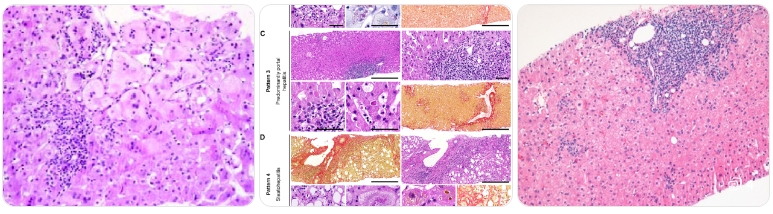
Grade 1 (Mild Hepatitis)
👉 Minimal inflammatory cells👉 Little hepatocyte damage
👉 Liver architecture preserved
👉 Often reversible
Grade 2 (Moderate Hepatitis)
👉 Noticeable portal inflammation👉 Mild necrosis of liver cells
👉 ALT/AST elevated
👉 Fatigue, jaundice possible
Grade 3–4 (Severe Hepatitis)
👉 Extensive necrosis👉 Bridging inflammation
👉 High risk of fibrosis
👉 May progress to cirrhosis if untreated
Fibrosis Staging (Important in CLD)
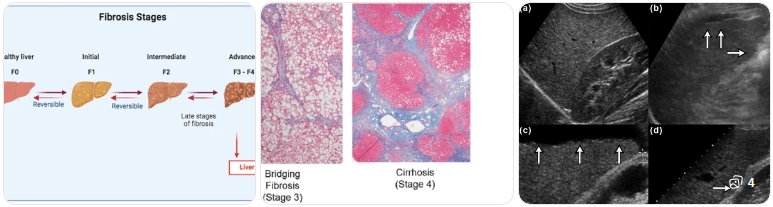
Fibrosis is staged differently from hepatitis grading.F0 – No fibrosis F1 – Mild portal fibrosis F2 – Moderate fibrosis F3 – Bridging fibrosis F4 – Cirrhosis
Cirrhosis – Structural Collapse
In advanced CLD:👉 Liver becomes hard and nodular
👉 Blood flow is obstructed
👉 Portal hypertension develops
Complications appear:
👉 Ascites
👉 Varices
👉 Hepatic encephalopathy
Liver Fibrosis vs 🔴 Liver Cirrhosis — Understanding the Difference
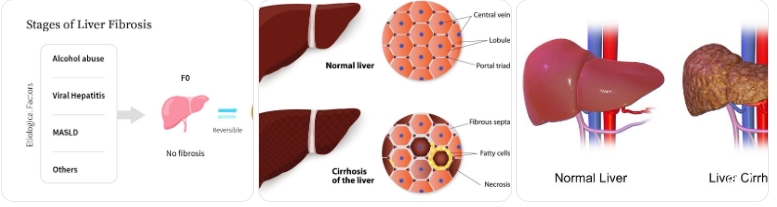
Liver Fibrosis and Liver Cirrhosis are both stages of chronic liver damage, but they differ significantly in severity, reversibility, and long-term impact.
Liver Fibrosis is the early to intermediate stage of liver damage. It occurs when the liver starts accumulating excess scar tissue due to ongoing injury—commonly from conditions like fatty liver disease, alcohol use, or hepatitis. At this stage, the liver is still able to perform most of its functions because healthy liver cells are still present. Importantly, fibrosis is often reversible if the underlying cause is treated early. Many people may not experience noticeable symptoms during fibrosis, making early detection crucial.
On the other hand, Liver Cirrhosis is the advanced and severe stage of liver damage. Here, the liver becomes extensively scarred, hard, and nodular, significantly impairing its ability to function. Blood flow through the liver is disrupted, leading to complications such as portal hypertension, fluid accumulation (ascites), and even liver failure. Unlike fibrosis, cirrhosis is generally irreversible, although its progression can sometimes be slowed or managed with proper treatment.
Level of Seriousness
👉 Fibrosis: Moderately serious but potentially reversible; early medical or lifestyle intervention can restore liver health.👉 Cirrhosis: Highly serious and life-threatening; associated with complications, increased risk of liver cancer, and often requires lifelong management or even liver transplantation.
The Philosophy
👉 The body is not your enemy👉 Disease is not a punishment.
👉 It is a signal.
When toxins accumulate, when inflammation persists, when oxidative stress remains uncontrolled — the organs silently absorb the burden.
Naturopathy & Ayurvedic Medicines focuses on:
👉 Removing the burden.
👉 Restoring balance.
👉 Awakening the body’s healing intelligence.
There is hope for improvement in vitality, strength, and internal balance.
👉 Healing is not instant.
👉 But with disciplined natural care, structured monitoring, and medical collaboration — improvement is possible.
Liver Care Program Overview
NaturoHeals provides liver wellness programs focused on nutrition, lifestyle improvement, naturopathy and ayurvedic principles. Our programs support individuals concerned about:
- Fatty Liver Disease
- Liver Inflammation
- Liver Detoxification Support
- Digestive Health
- Metabolic Health
- General Liver Wellness
Conditions Associated With Liver Health
- Non Alcoholic Fatty Liver Disease (NAFLD)
- Fatty Liver
- Liver Fibrosis
- Liver Cirrhosis
- Hepatitis
- Liver Inflammation
- Liver Detoxification
- Metabolic Syndrome
- Obesity Related Liver Disease
Medical Review & Wellness Guidance
This content is reviewed and maintained by the NaturoHeals healthcare team specializing in nutrition, naturopathy, lifestyle medicine and wellness coaching.
Author: Idnan Asad - Founder of Naturo Heals, A Research Scholar in Naturopathy, PGD Naturopathy (London), C.I.M (Integrated Medicine), C.N.T.P (Ayurveda), MBA (UK), PGPx (IIM Bangalore), MSc (PTU), Elect Engg (CCP)